

The phonics program made for parents.
A screen-free way to teach your child to read.
10 minutes a day. Built on the science of reading.
The Problem
There is no clear system for motivated parents.
Academic books are impenetrable. The familiar early readers are engaging but don't teach the mechanics that actually produce fluent readers. Apps gamify without building foundations.
Meanwhile, the burden of teaching a child to read has been quietly transferred to parents, without tools.
The result: motivated, educated parents who love books, who can't explain to their own child why letters make the sounds they do.
The System
Everything you need is on the page, in one place.
50 lessons, 10 minutes a day. You don't need to know how to teach phonics. Every word you say is written down for you. Just open the book and start.

Step 01
LEARN A LETTER
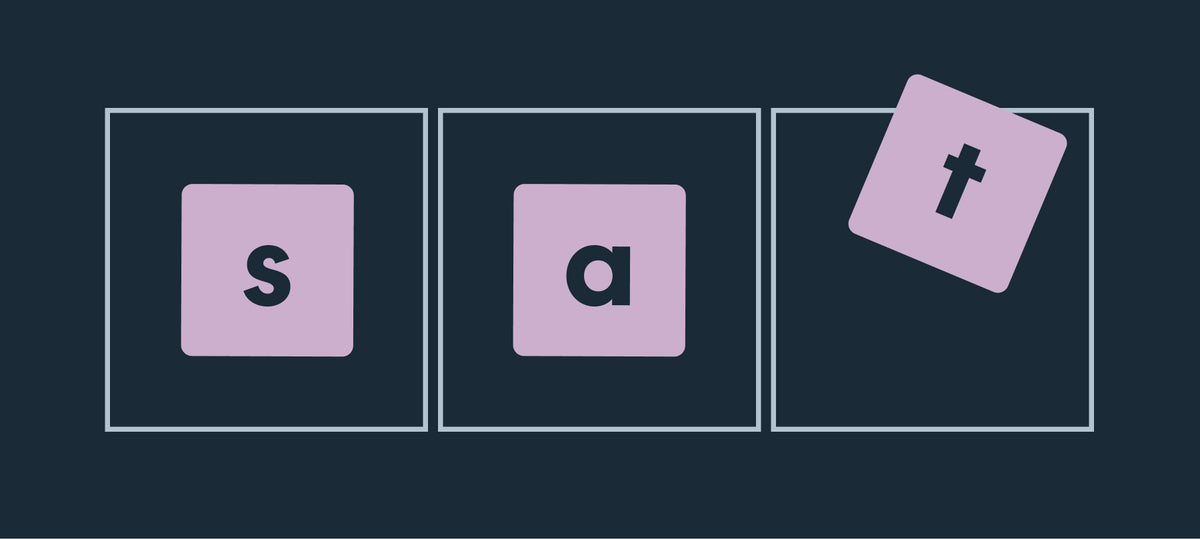
Your child learns the letter, the sound, the mouth shape, and how to write it. Every lesson is scripted, so there's no prep work for you.
Step 02
BUILD WORDS
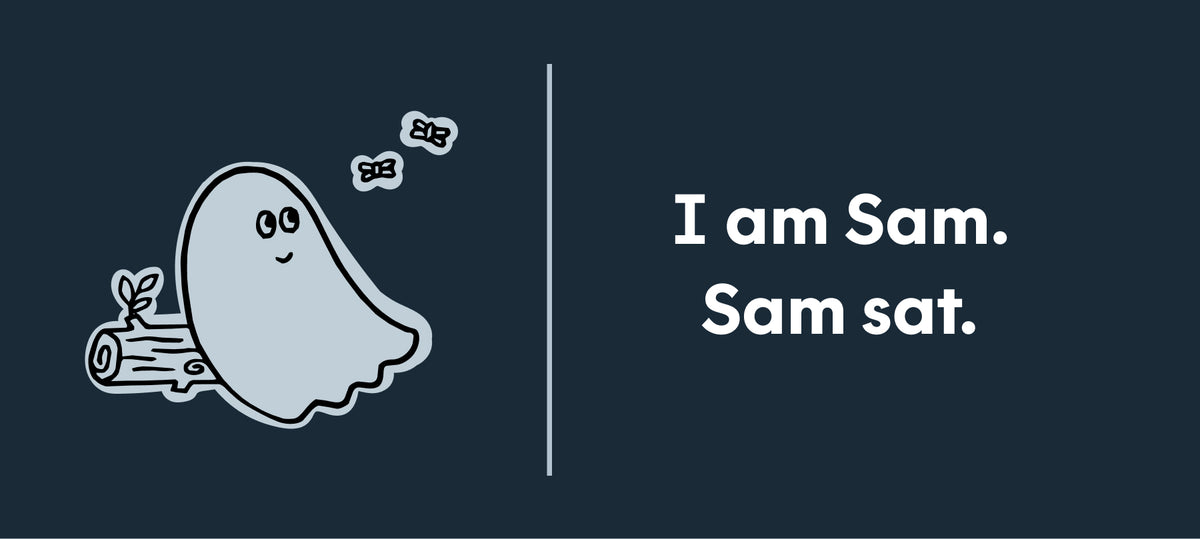
Using letter chips and a sound board, your child builds words sound by sound. Spelling and reading are two sides of the same skill: each one strengthens the map that links letters to sounds.
Step 03
Read a Book
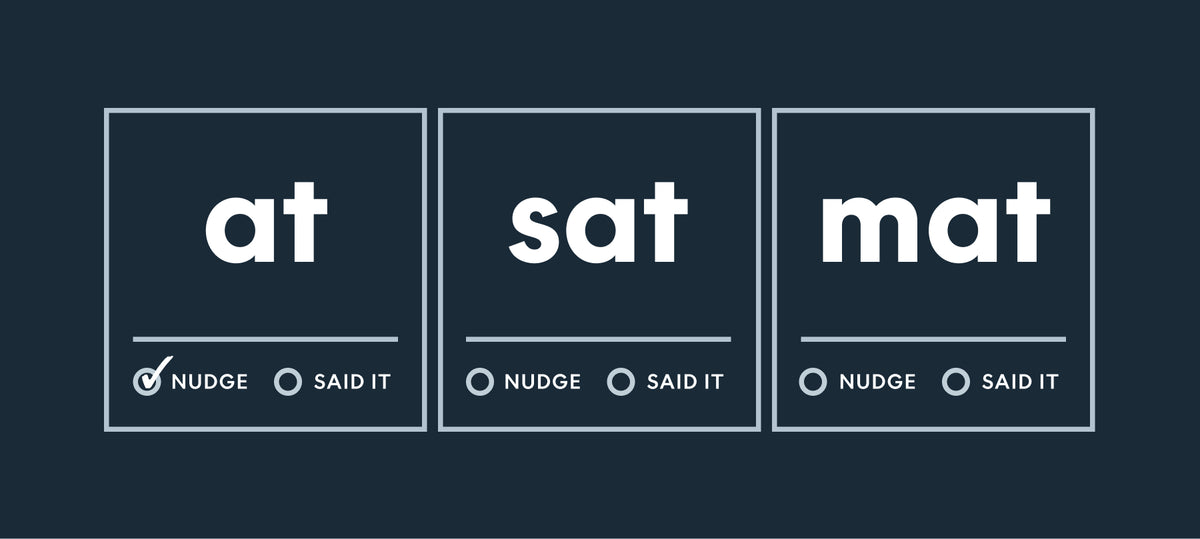
Next, your child reads a story built only from the letters they've learned so far. I am Sam. Sam sat. Reading the first book feels like magic. But it's science.
Step 04
Mark the Milestone
After every four letters, you'll do a check-in, not a test. See what stuck for your child and what needs another pass. Then onto the next four letters.
50 lessons. 10 minutes a day. Away from screens.
Inside the workbook
260 pages. 50 lessons. Your child learns every letter's sound and shape, how to blend those sounds into words, and, by the end, how to read a story on their own.
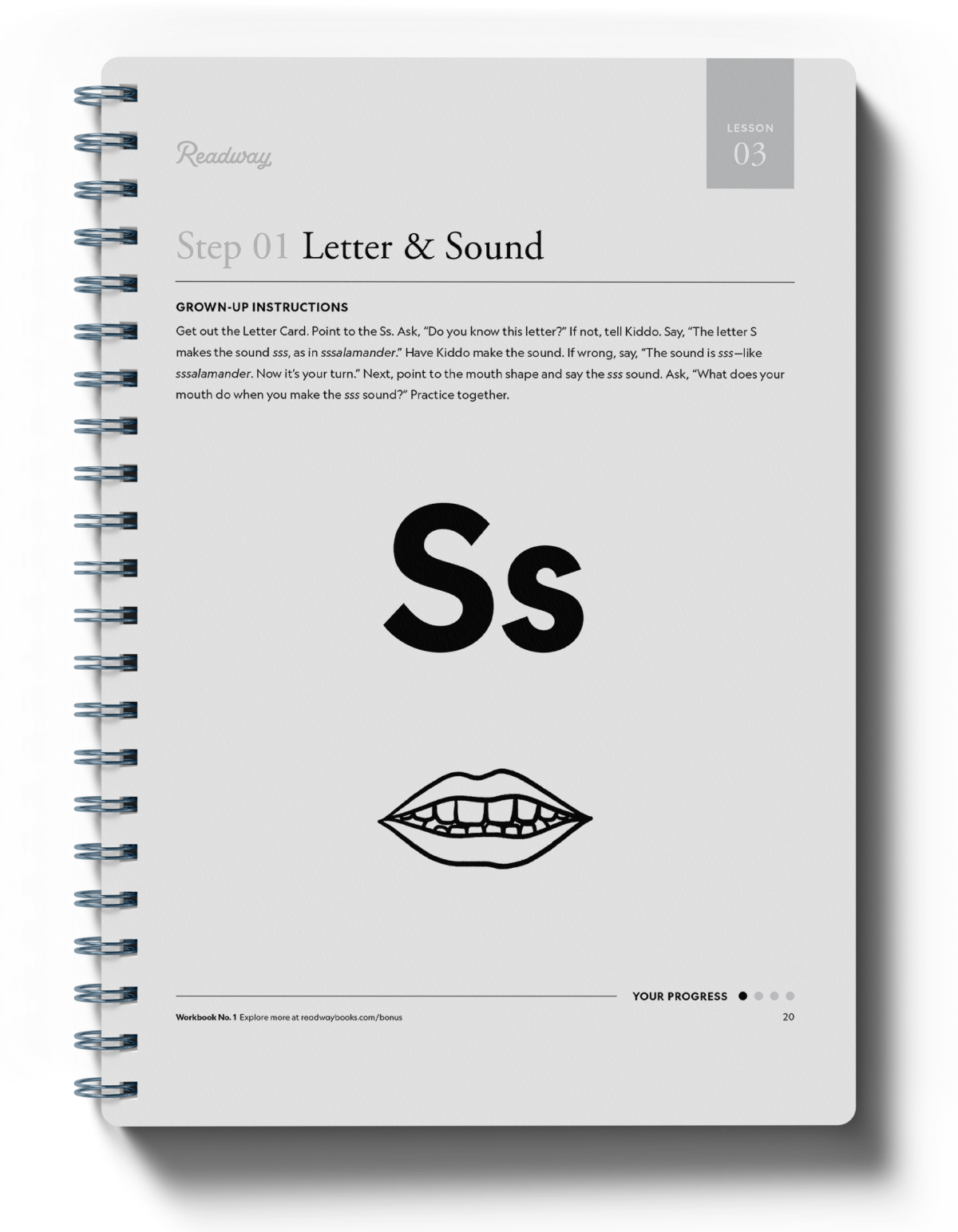
Letters
For every letter, your child will practice the sound, mouth shape, and how to write it.
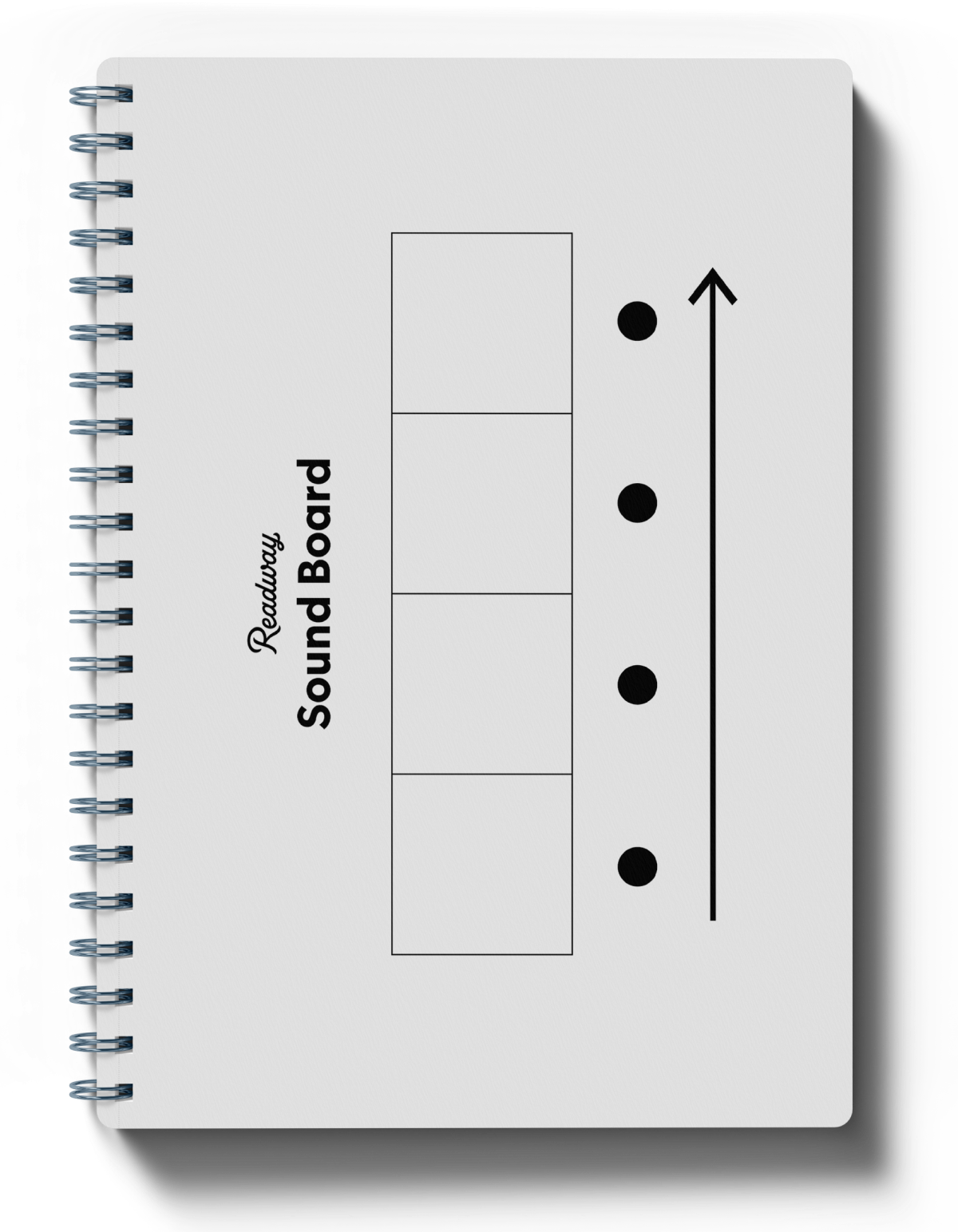
Spelling
A sound board and letter chips, printed in the book. Pop them out once, use them all the way through.
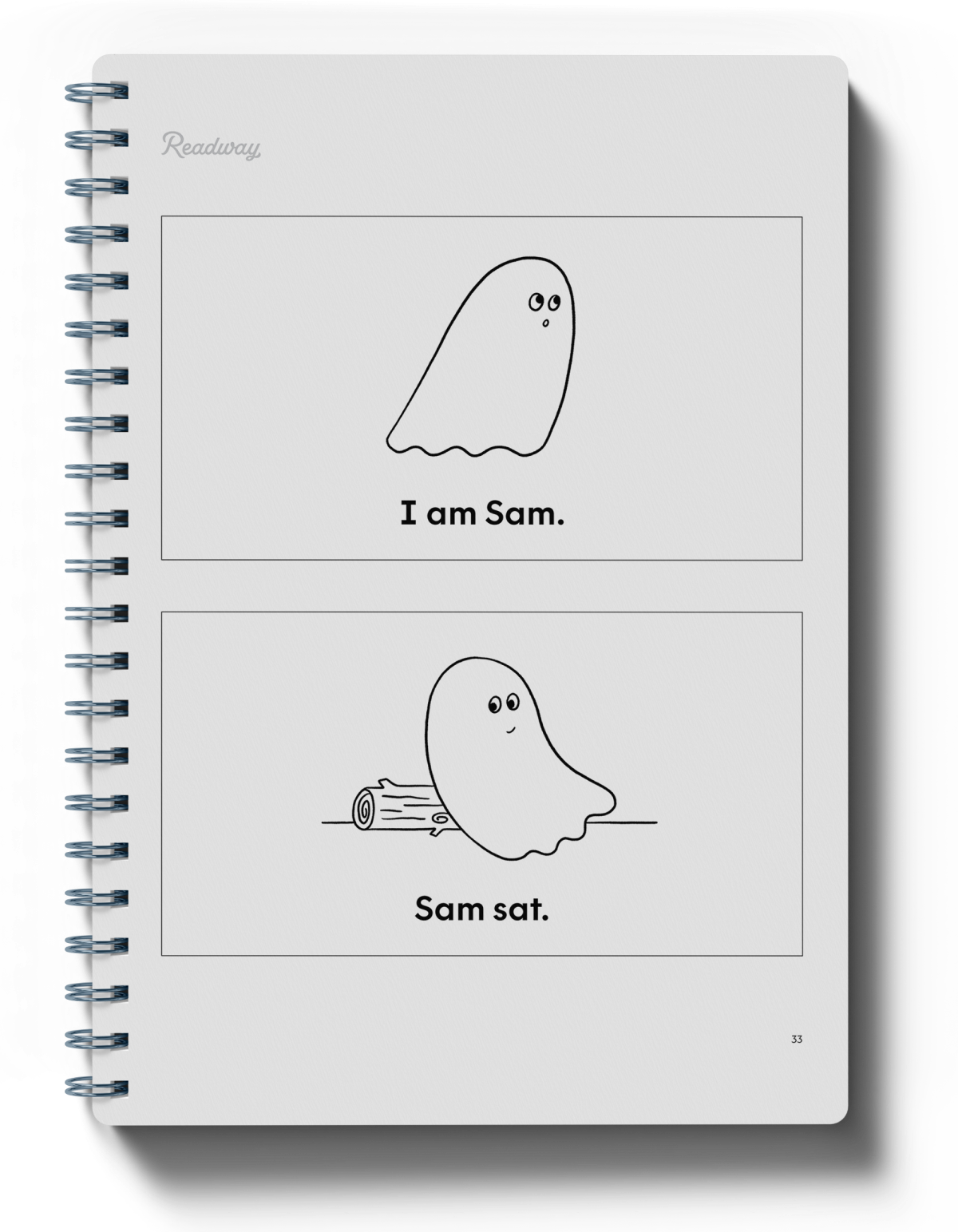
Reading
Seven stories your child can read, each one built only from letters they've already learned.
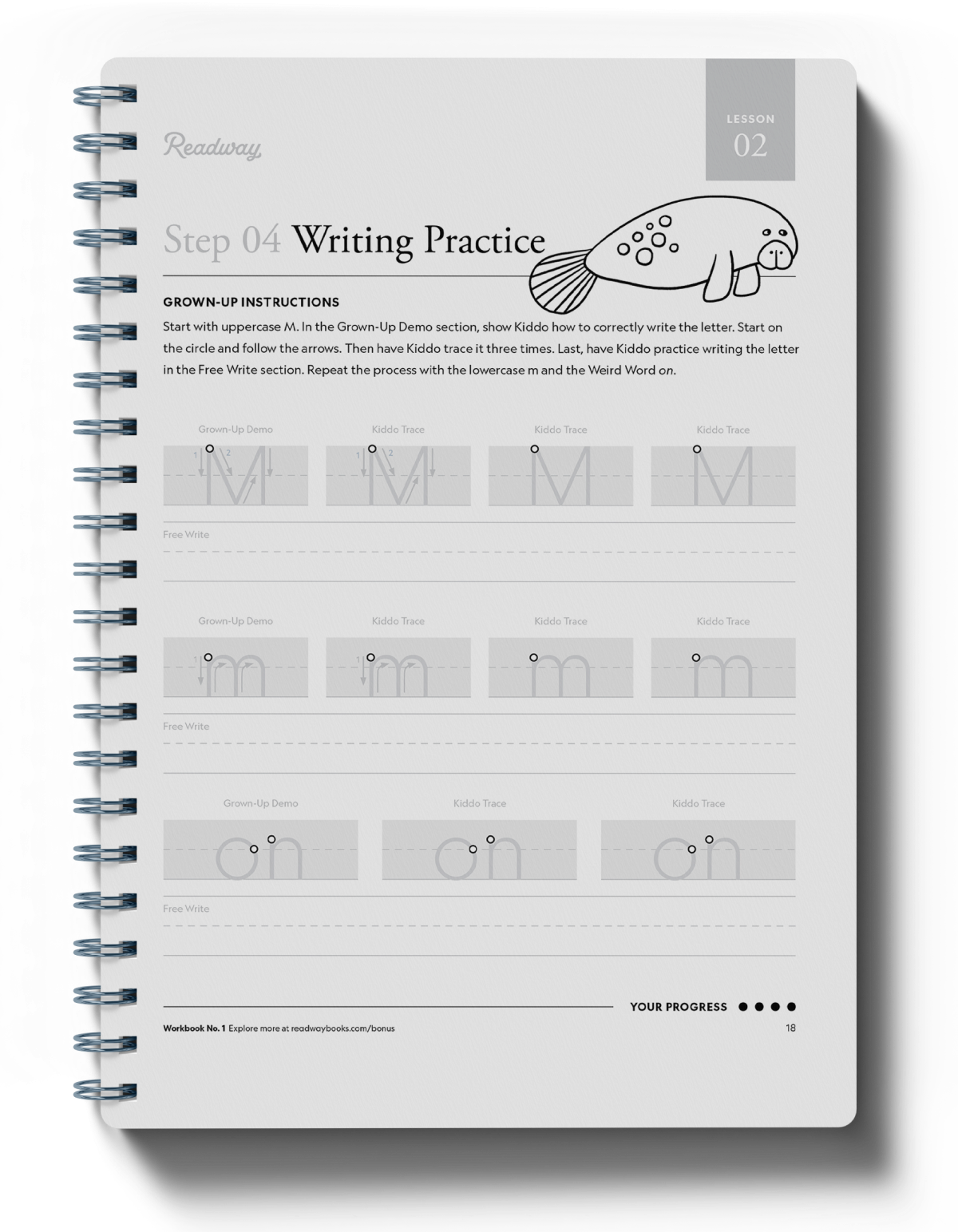
Writing
Trace, then write from memory. Every letter, upper and lower case, with room to write on their own.

Milestones
Seven check-ins along the way, and a certificate at the end for your kiddo.
JOIN THE WAITLIST →The science
Three things build a reader.
Children learn the sounds first, then blend them into words, and then read stories made from what they've learned. These are the first three of the five pillars identified by the National Reading Panel. Vocabulary and comprehension grow alongside this, and they can be taught directly too. They become the main work once decoding is automatic.

HEAR THE SOUNDS
Before letters mean anything, a child has to hear that sat is three separate sounds.
MATCH SOUNDS TO LETTERS
Explicit, in a deliberate order, one at a time. Not guessing from pictures or context.
READ WORDS, THEN STORIES
Letters become words, words become sentences made from what they've already learned.
Our Story
Nobody Taught Us.
We were both college professors. Christian taught students who couldn't read at a college level. When our daughter's kindergarten reading scores came back in red, we paid attention. We volunteered in her classroom, learned how phonics is taught, and practiced with her at home. Her scores turned green. She reads a novel a month now.
Years later, our son turned four and we went looking for a clear, beautiful program for parents. There wasn't one.
That gap isn't a personal failing. Four in ten American fourth-graders now read below NAEP's basic level. Most adults were never taught how reading works, and somewhere along the way the job of teaching it got handed to parents without the instructions.
So we wrote the instructions down. Our son has been our first reader and our toughest editor. Every lesson in Book 1 has been through his hands.
Frequently Asked Questions
Most children are ready somewhere between four and six. A good sign is that your child knows some letters and enjoys being read to. If your child isn't ready yet, put the book away and come back in a few months.
Yes, and don't skip ahead. Knowing a letter's name isn't the same as knowing its sound, and knowing a sound once isn't the same as knowing it without thinking. Systematic phonics is cumulative by design: every lesson revisits what came before, because repetition is how the link between letters and sounds becomes automatic rather than effortful. The early lessons will go quickly. Let them.
No. Every word you say is printed on the page: what to point at, what to ask, what to do if the answer is wrong. Just open the book and start. No prep needed.
Fifty lessons, about ten minutes each. At three a week that's roughly four months; at five a week, about ten weeks. Go at your child's pace. Our system was made to fit into a busy family's life.
Both will happen. The lessons build on each other, but they don't expire. Pick up where you left off, repeat one that didn't stick, stop early on a hard day. A short, happy lesson beats a long one.
What the research keeps finding is that the thing that helps a child learn isn't the material. It's a grown-up paying attention.
Compare a parent reading a paper book with a child against a child using a digital book alone, and the parent-and-paper version wins. Compare young children learning something from a screen against learning the same thing from a person, and the person wins. Look at children learning letters, and the ones who write them by hand build the brain pathways for reading, the ones who type them don't.
A screen isn't useless. But most of the time it's there so a grown-up doesn't have to be, and that's the part that costs you.
Readway puts the grown-up back in the room. Ten minutes, one book, the two of you looking at the same page.
Children have been learning letters by making marks on something they can hold for about five thousand years. Screens have been in the room for twenty.
Grow a Reader
Join the Waitlist
Get early access to exclusive pricing, tips for reading, and more.
No spam. Unsubscribe anytime.